
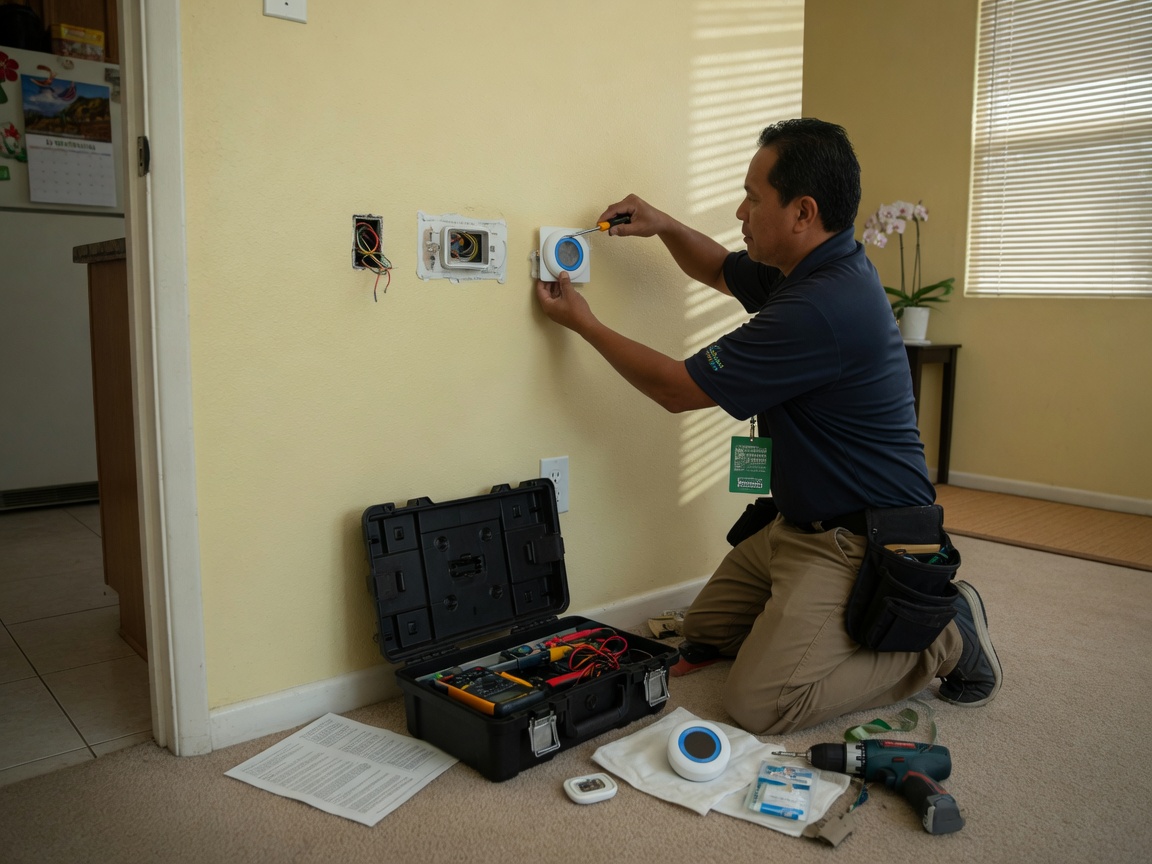
Waipahu homes built during the plantation era often carry older low-voltage wiring and single-stage AC units that need careful matching before any smart thermostat goes in. Installers check for C-wire presence, confirm 24V compatibility and test the existing air-handler relay because many Royal Kunia and Waikele properties still run original 1980s equipment. Trade winds create rapid temperature swings that can confuse basic smart models, so proper sensor placement away from windows and doors matters. Honolulu County electrical code requires that any low-voltage work inside the air-handler compartment stay accessible and properly secured.
High humidity in Waipahu means thermostat sensors must sit where they read room air, not supply plenum moisture that can trigger false readings or short cycles. Technicians verify the new thermostat communicates with the outdoor condensing unit through the existing thermostat wire run, which is often buried in attic insulation that has settled over decades. In homes near Waipahu Cultural Garden Park or Hawaii Plantation Village, narrow attics and low ceilings make running new wire time-consuming, so most jobs stay on the existing two-wire or four-wire setup when possible.
Power interruptions from brief island storms require thermostats with backup schedules that resume correctly once power returns. Installers also confirm the homeowner's Wi-Fi reaches the indoor unit location; many single-wall Waipahu houses have metal lath that blocks signals. Final setup includes teaching the owner how to set geofencing and humidity targets so the system reacts to the constant 75–85 °F range without over-cooling during trade-wind gusts.
Technician insight
In Waipahu the thing that catches most people out with Smart Thermostat Installation is the age of the low-voltage wiring inside single-wall homes near Hawaii Plantation Village. Those original runs often lack a C-wire and sit in attics where settled insulation blocks Wi-Fi, so we end up using adapters or fishing new wire through tight chases that newer subdivisions never have.
Waikele Home With No C-Wire
Homeowner in Waikele could not keep a stable connection on the original two-wire setup. We found the air handler still used the 1980s relay board common in that neighborhood. Added a common-maker adapter, mounted the new thermostat on an interior wall away from the trade-wind path through the carport, and set humidity limits so the unit would not short-cycle during afternoon gusts.
Smart Thermostat Installation Services We Offer
✓Wi-Fi Thermostat Installation
Mounts and configures Wi-Fi thermostats on existing or upgraded wiring in Waipahu single-family homes.
✓Compatibility Assessment
Tests older air handlers in Waikele and Royal Kunia for C-wire needs and control board compatibility before purchase.
✓Central AC Integration
Links smart thermostats to existing split systems common in Honolulu County plantation-era houses.
✓Humidity Control Setup
Programs dehumidification schedules that match Waipahu's constant moisture without short-cycling the unit.
✓Remote Sensor Placement
Installs additional room sensors to handle temperature differences caused by trade winds through open layouts.
✓Power-Outage Schedule Recovery
Configures backup schedules so systems restart correctly after brief island power interruptions.
Smart Thermostat Installation Cost in Waipahu, HI
| Service | Typical Range | What Affects It |
|---|---|---|
| Basic Wi-Fi Thermostat Installation | $225–$375 | Standard replacement on homes with existing C-wire. |
| C-Wire Adapter Or New Run | $125–$275 | Required in many Waipahu plantation-era houses. |
| Multi-Room Sensor Add-On | $95–$185 | Helpful for trade-wind temperature swings. |
| Full System Integration And Programming | $150–$250 | Includes humidity targets and power-recovery schedules. |
Ranges are typical for Waipahu, HI and confirmed with an exact written quote before any work starts.
How it works
- 1
Site Assessment
Technician inspects the air handler, thermostat wiring and Wi-Fi signal at the Waipahu address to confirm compatibility.
- 2
Wiring Preparation
Adds C-wire or adapter if needed while protecting original low-voltage runs common in older Honolulu County homes.
- 3
Thermostat Mounting And Connection
Installs the new unit, labels wires and secures the base plate to the wall.
- 4
Testing And Owner Walkthrough
Verifies cooling calls, Wi-Fi connectivity and programs humidity and geofence settings with the homeowner.
Pricing
Upfront quote given after on-site wiring and equipment check.